In this article, the AI robot FR-1 explains to Rei, a university student, about the purpose, significance, and rules of the "Simulated Disaster Challenge", one of the competitions in WRS2025 harsh environments F-REI Challenge.

FR-1: Hello, Rei. Today, I will explain in detail the purpose, significance, and rules of the "Simulated Disaster Challenge", one of the competitions of the World Robot Summit 2025 (WRS2025). If you have any questions, please feel free to ask.
Rei: Hello! Simulation Disaster Challenge, simulation and disaster are not very connected, but what kind of competition is it? Robots move around the simulated disaster site, right?
FR-1: Yes, that's right. This challenge is a competition that takes place in a virtual environment using a computer. In a real plant disaster, there are many tasks that are difficult to implement due to safety reasons and the length of time to reset the field for each competition. Therefore, by using simulation, we are actively incorporating harsher environments that are difficult to reproduce with actual machines, and our main focus is to evaluate the disaster response capabilities inside plants and structures after disasters.
Rei: I see, there are things that can only be done virtually. You don't have to worry about the robot breaking, or not?
FR-1: Yes, that's right. This challenge is a competition that takes place in a virtual environment using a computer. In a real plant disaster, there are many tasks that are difficult to implement due to safety reasons and the length of time to reset the field for each competition. Therefore, by using simulation, we are actively incorporating harsher environments that are difficult to reproduce with actual machines, and our main focus is to evaluate the disaster response capabilities inside plants and structures after disasters.
Rei: I see, there are things that can only be done virtually. You don't have to worry about the robot breaking, or not?
Rei: Wow, it's also useful for education! What specific rules do you have? I wonder if I can participate on my laptop?
FR-1: That's right. In simulation competitions, robots and drones are not broken during competition. The purpose of this competition is not just to compete in technology, but also to consider the performance evaluation and standardization of disaster response robot simulators. In addition, this competition is expected to be effective in a wide range of fields, such as robot evaluation in agile robot development, STEM education using robots, robot operation evaluation in factories, disaster response strategies using robots, and robot operator training. In a simulation environment, there is no need to look for a place that meets the evaluation criteria when evaluating the cooperation between land, sea, and air robots. Furthermore, from the perspective of Fukushima reconstruction, a reactor pressure vessel has been installed on the competition field, and a mission has been set to move the ducts leading to it with drones and enter the container to check the interior. This promotes the development of technologies for information gathering and emergency response in harsh environments.
Rei: Wow, it's also useful for education! What specific rules do you have? I wonder if I can participate on my laptop?
FR-1: To participate in the competition, you need a PC with the same specifications as the PC used in the competition, specifically CPU: Core i9-13980HX, GPU: GeForce RTX 4080, memory: 32GB, SSD: 1TB, and an environment capable of ROS2 communication. The software requires the latest version of Choreonoid and the AGX Dynamics Choreonoid Plug in by Argorix, a paid physics package, and the USB dongle for the plug-in will be lent free of charge after the decision to participate in the competition. Information about the competition is available on GitHub.
Rei: It's quite high-spec. How many people do you have on the team?
FR-1: Regarding the team composition, the maximum number of people in the paddock is 4, and the actual competitors are 2. You can't change members during a competition, but you can switch roles in your team for each mission.
Rei: I see. What are the types of tasks?
FR-1: Competition tasks can be broadly divided into the following four categories.
● Movement [M] (basic points: 10 points): This task involves the robot moving from point A to point B, maintaining its path. It requires movement on a variety of terrains, such as slopes, catwalks, ducts, and stairs.
● Confirmation [R] (basic points: 10 points): This task accurately obtains and reports the necessary information, such as target recognition, meter reading, and water level confirmation. The target consists of a QR code and a pipe, and the QR code uses version 1, error correction ability level Q (25%).
● Operation [O] (basic points: 10 points): Tasks to complete specified operations, such as operating switches and valves, opening and closing doors, pulling out rods, and moving obstacles. For example, a fire hydrant requires 5 Nm of torque to open the valve and 2 Nm of torque to rotate the water release lever.
● Work [W] (basic points: 10 points): This is a task that performs a series of actions to achieve the objective according to the specified procedure, such as fire extinguishing work. Fire extinguishing work includes steps such as opening the door of the fire extinguishing equipment, pulling out the hose, connecting the nozzle, opening the fire hydrant valve, and moving to the fire source and releasing water.
The score for each task is calculated by multiplying the "basic points of the competition category" by the "coefficient of type" and "coefficient of details".
Rei: What kind of field do you actually compete in?
FR-1: The competition field is built in an environment that mimics a plant after a disaster, divided into multiple areas. This field replicates a typical factory plant with task element parts such as plant piping, valves, and meters in place. Environmental conditions include closed spaces, confined spaces, light and dark areas, wireless communication areas, fire, and smoke, and the intensity of lighting, wireless communication bandwidth, and delay can be controlled according to the competition design. Harsh environmental conditions such as dark places, wind, smoke, and water make it difficult to perform tasks. Four competition areas are prepared on one floor, and competitions are held as the conditions in the area change from session to session.
Rei: Is there a time limit? What happens if the robot gets stuck?
FR-1: The competition time is managed in real time, with 15 minutes per mission for the preliminaries and 15 to 25 minutes for the semi-finals and finals. If the robot gets stuck, it can be retried as many times as it wants during the competition time, but the points obtained from the mission will be reset and returned to 0 points, and the competition time will continue to progress. Each mission also has a "starting position" and a "finish position", and all robots must have completed the movement to these designated positions at the end of the competition. If they do not complete it, the robot will be considered "lost" and will be deducted points by multiplying the score of that mission by 0.5, but it is possible to use the lost robot in the next mission in the qualifiers.
Rei: How do you decide to score? Will using the original robot give you an advantage?
FR-1: Yes, that's right. In addition to the platform robots prepared by WRS, you can also participate with your own original robots. The original robot needs to be inspected in advance, but the tasks scored by it are multiplied by the "coefficient by the robot" (1.0~1.5) to get a high score. In addition, the following coefficients also affect the score:
● Coefficient based on environmental conditions (1.0~3.0): Points are added for completing tasks in harsh environments such as dark places, wind, smoke, and water.
● Coefficient by Autonomous Operation (1.3~3.0): If you complete all tasks in the mission with autonomous motion, it will be multiplied by the score of the entire mission.
● Environmental Map Coefficient (1.0~1.2): If you submit environmental information (map, temperature, etc.) of the competition field, it will be multiplied by the score of the entire mission.
● Time points: If you finish the competition earlier than the allotted time and all robots are in the start or finish position, 2/60 points will be added for every second remaining.
In addition to the losses described earlier, deductions may apply to specific "deductions for competitive tasks" or "deductions by the competition committee" if deemed inappropriate by the competition committee. The final standings will be determined by the total number of points scored in the qualifying, semi-final, and final missions.
Rei: It's evaluated in great detail! I could see that there are many challenging elements unique to simulation. Thank you, FR-1!FR-1!
FR-1: You're welcome, Rei. This simulated disaster challenge is an important competition that contributes to the development of disaster response robot technology in harsh environments and its future social implementation. We are honored to have you interested.
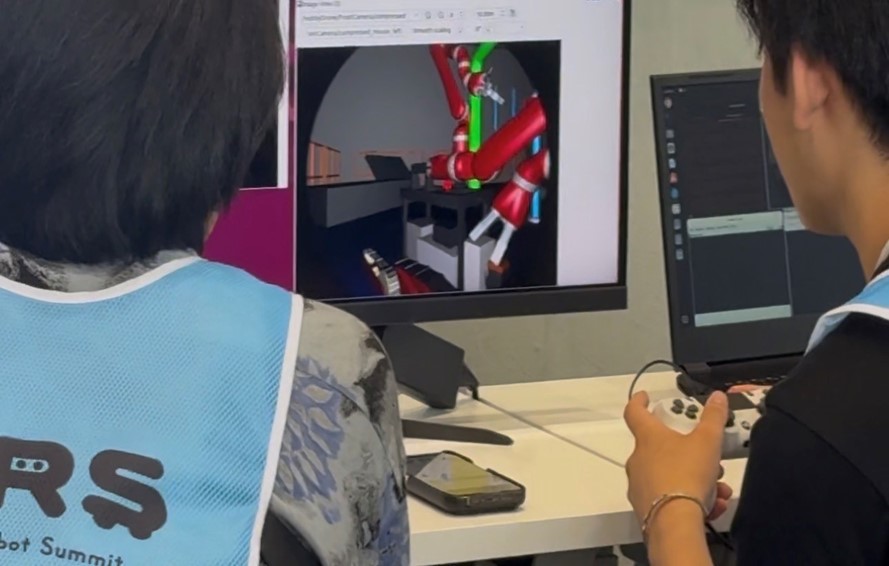
Photo 1: STM competition in action at the pre-tournament (2024)
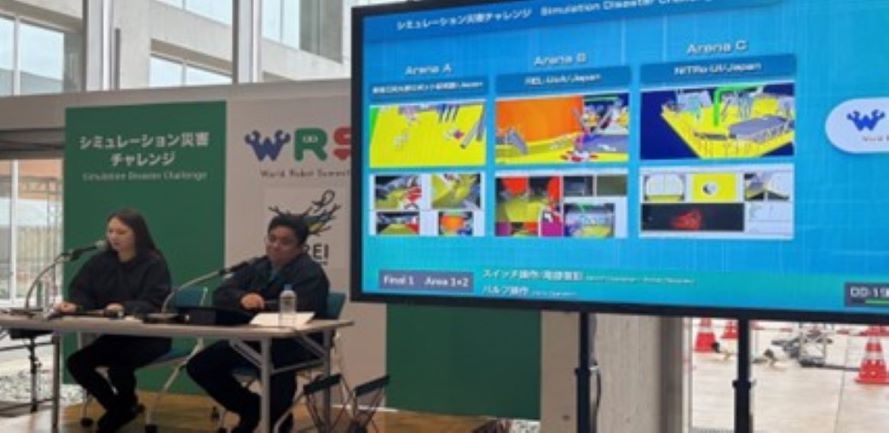
Photo 2: Live broadcast of STM competitions at the pre-tournament (2024)