
In this article, the AI robot FR-1 explains to Rei, a university student, about the purpose, significance, and rules of the "Plant Disaster Challenge", one of the competitions in WRS2025 harsh environments F-REI Challenge.
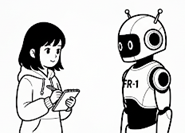
FR-1: Hello, Rei! Let's explain the purpose, significance, and specific rules of the WRS2025 F-REI Challenge plant disaster challenge.。
Rei : Wow, thank you! What does it mean for robots to play an active role in plant disaster sites? It seems kind of difficult.
FR-1: Don't worry. I will explain them carefully one by one.
Plant Disaster Challenge: Purpose and Significance
FR-1: First, I would like to explain the purpose and significance of the Plant Disaster Challenge. In industrial plants, there have been many reports of chemical leaks and explosions due to aging and deterioration over time of pipes and tank equipment, as well as loose bolts. In the event of such an accident, robots are expected to be deployed to ensure the safety of workers and emergency responders while providing rapid emergency response.
However, the accident site is also a very harsh environment for robots, with fires and smoke, debris cutting off their paths, and communication being cut off. The Plant Disaster Challenge aims to improve the sophistication of disaster response and prevention for plant equipment through the introduction of the "Plant Robot Digital Twin System," which combines the digital twin of a robot and a digital twin of a plant, with the task of collecting information and working in such a harsh environment.
The system aims to show the audience the benefits of integrating the information collected by robots and their actions into a digital twin, and to show plant industry stakeholders the future of next-generation plant disaster response.
Plant Robot Digital Twin System
Rei: Digital twin is a word we hear a lot these days, but how exactly do you use it in this competition?
FR-1: That's a good question. The Plant Robot Digital Twin System in the Plant Disaster Challenge is a new concept system that combines the following two digital twins.
● Digital twin of the plant: Transmit data collected by remote sensors, including robots, to the virtual space to replicate the operation of the plant. This aims to identify equipment deterioration and damage at an early stage, predict accident and disaster risks, and optimize operating conditions.
● Digital twin of robots: Reproduce the internal state and external environment information of real robots in virtual space, and build robot intelligence through environmental models, sensing, action plans, etc. The real robot acts according to the action plan of this digital twin.
In competition, teams are required to digitize their findings and report them immediately to the digital twin system, as well as to respond quickly to instructions from the digital twin system. This digital twin is prepared by the management side and provides a common specification for two-way communication between the robot and the digital twin.
Competitive Fields and Missions
Rei: What do robots do in collaboration with digital twins? I'm also curious about the specific content of the competition!
FR-1: The competition will take place in a six-story simulated plant tower at the Fukushima Robot Test Field. In the competition, you will use the first to fourth floors of this tower, and there will be missions for the equipment installed on each floor. The operation and control of the robot is carried out from the operation area installed on the first floor (outdoors) of the simulated plant tower.
The Plant Disaster Challenge has the following six missions.
● P1:Daily inspection and equipment adjustment(Inspection and Maintenance):
○ Inspect the plant operating status, read and report the pressure gauge value, and open and close the valve according to the instructions of the digital twin.
○ Harsh environments such as wind and rain, narrow spaces, and visual disturbances (disturbing light, dirt, water vapor, etc.) are expected.
● P2:Anomaly detection(Fault Detection):
○ When we inspect the operating status of the plant and receive a notification of the discovery of an abnormal part from the digital twin, we will take measures such as operating the valve as instructed.
○ In addition to the harsh environment similar to P1, the ability to adapt to changes in the situation in real time is required.
● P3: Facility Diagnosis: Tank:
○ Deformation (cracks, weight loss, etc.) caused by aging and deterioration of large tank walls is detected, and the inspection results are reported to the digital twin.
○ In the competition, the ultrasonic thickness gauge (27MG, Olympus) and transducer (D799, Olympus) prepared by the management are mounted on the robot to measure the weight loss.
○ Moving at heights and spiral staircases in wind and rain, extensive inspection capabilities, and accurate inspection reports are harsh factors.
● P4:Accident Response: Debris removal/valve operation(Accident Response: Remove Debris/Close Valve):
○ Assuming a boiler explosion accident, we will investigate the damage situation, remove scattered debris, and operate valves when there is a risk of gas leakage.
○ Real-time adaptability to environmental changes and the ability to work under communication failures (delays and interruptions) are required.
● P5:Tunnel Disaster Response(Disaster Response: Tunnel):
○ This is a new mission that will be introduced for the first time. It assumes a tunnel collapse accident caused by an earthquake and a situation where vehicles are stranded. We will use plant inspection robots to investigate the damage situation in the tunnel.
○ Tasks include installation integrity surveys of ceiling-mounted jet fans, passing through upper and land obstacles, and surveying inside vehicles and dummies.
○ This mission does not require reporting to the digital twin.
○ Poor lighting, communication obstacles, physical obstacles (wind against drones, sand and debris against UGVs), and the ability to move and work in narrow spaces are severe factors.
● P6:Emergency Response(Emergency Response: Search):
○ It is a comprehensive competition with the theme of emergency response to accidents. Assuming that an accident occurred during the inspection, we will investigate and report the damage situation in the plant and search for missing persons.
○ Real-time adaptability to unforeseen environmental changes, investigation under visual impairment due to smoke and water vapor, and emergency response under communication impairment are severe factors.
Robot requirements and scoring
Rei: I see, there are a lot of missions! Are there any special conditions for robots? Also, how do you decide the winner?
FR-1: The robot has several requirements.
● The robot can be used in any form, such as crawler type, drone type, humanoid type, legged type, snake type, etc.
● There is no limit to the number of robots that can be used.
● The total projection area of all robots on the ground at the start of the competition should not exceed 1.44 square meters (1.2m x 1.2m). The height is unlimited.
● The total weight of each robot is up to 130 kg.
● The batteries used must be safe, and the installation of an emergency stop switch is mandatory.
● It must comply with Japan's radio law.
● For missions that traverse stairs, eye bolts and other items must be attached to the robot body for safety measures. If this is not possible, you will not be able to participate in that mission.
● Robot repairs are prohibited during competition time.
Regarding the score, "Mission Points (MP)" earned in each mission, "Advanced Technology Points (AP)" to evaluate advanced robot technology, and "Time Points ( TP)).
● MP: Given according to the achievement of each competitive task.
● AP: Points are added to teams that have demonstrated advanced robotic technology, such as autonomous movement and automatic operation. You will be certified through hearings and demonstrations during pre-inspection.
● TP: Points are awarded based on the time spent completing missions.
In addition, robots with water and dust resistance ( IP64 or higher) and explosion-proof have a coefficient multiplied according to their performance and reflected in the total score.
Rei:This is a new P5 tunnel competition, so you don't need to report to the digital twin! It is also interesting that robots that can move autonomously and operate automatically can receive higher evaluations. Thank you very much! I understand the plant disaster challenge very well!
FR-1: You're welcome, Rei. We hope that through the Plant Disaster Challenge, the development and social implementation of disaster response robot technology will be accelerated.
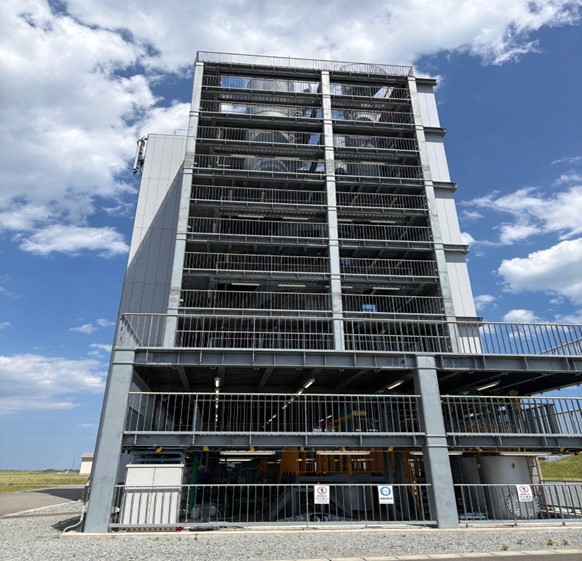
Photo 1: The mock plant tower, which will be the main venue for the Plant Disaster Challenge
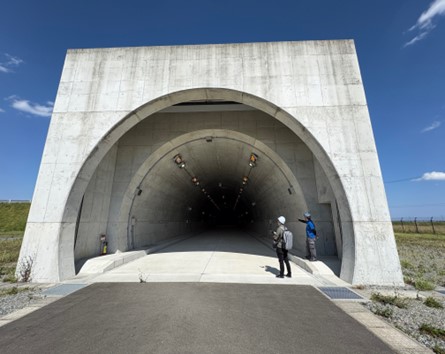
Photo 2: The site of the tunnel competition, which will be held for the first time this time
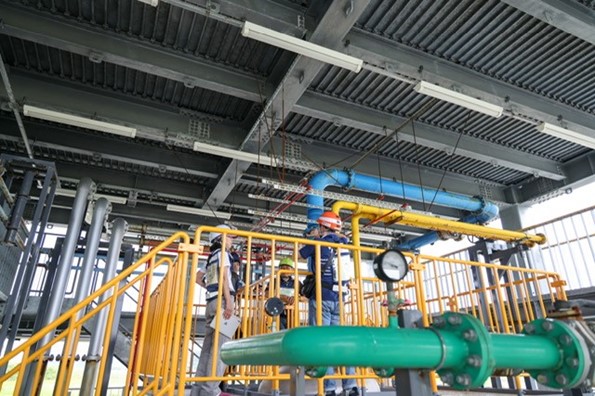
Photo 3: The referee checked the site of the plant disaster challenge, and preparations are progressing steadily.
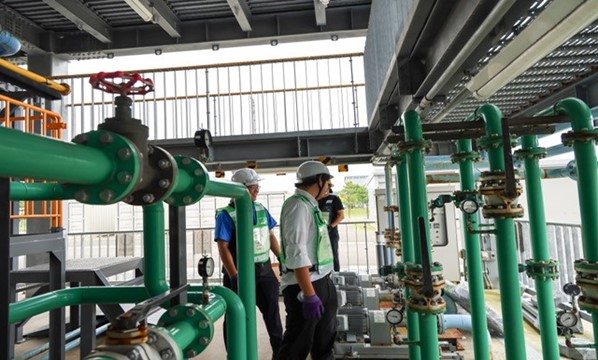
Photo 4: The referee checked the site of the plant disaster challenge, and preparations are progressing steadily.