From August 19 to August 27, 2026, the Soil and Plant Multi-Dynamics Unit welcomed students of F-REI Summer Internship 2026. This program aimed to provide an opportunity for students to develop their knowledge and skills as researchers through first-hand experience in F-REI's real-world research. A total of 6 students participated in the program, which included 3 master’s students, 2 undergraduate students, and 1 KOSEN (technical college) student.
The program was led by Senior Researcher Marcel Pascal Beier and Researcher Nuanaon Nobchulee as primary research supervisors, under supervision by Unit Leader Nihei Naoto.
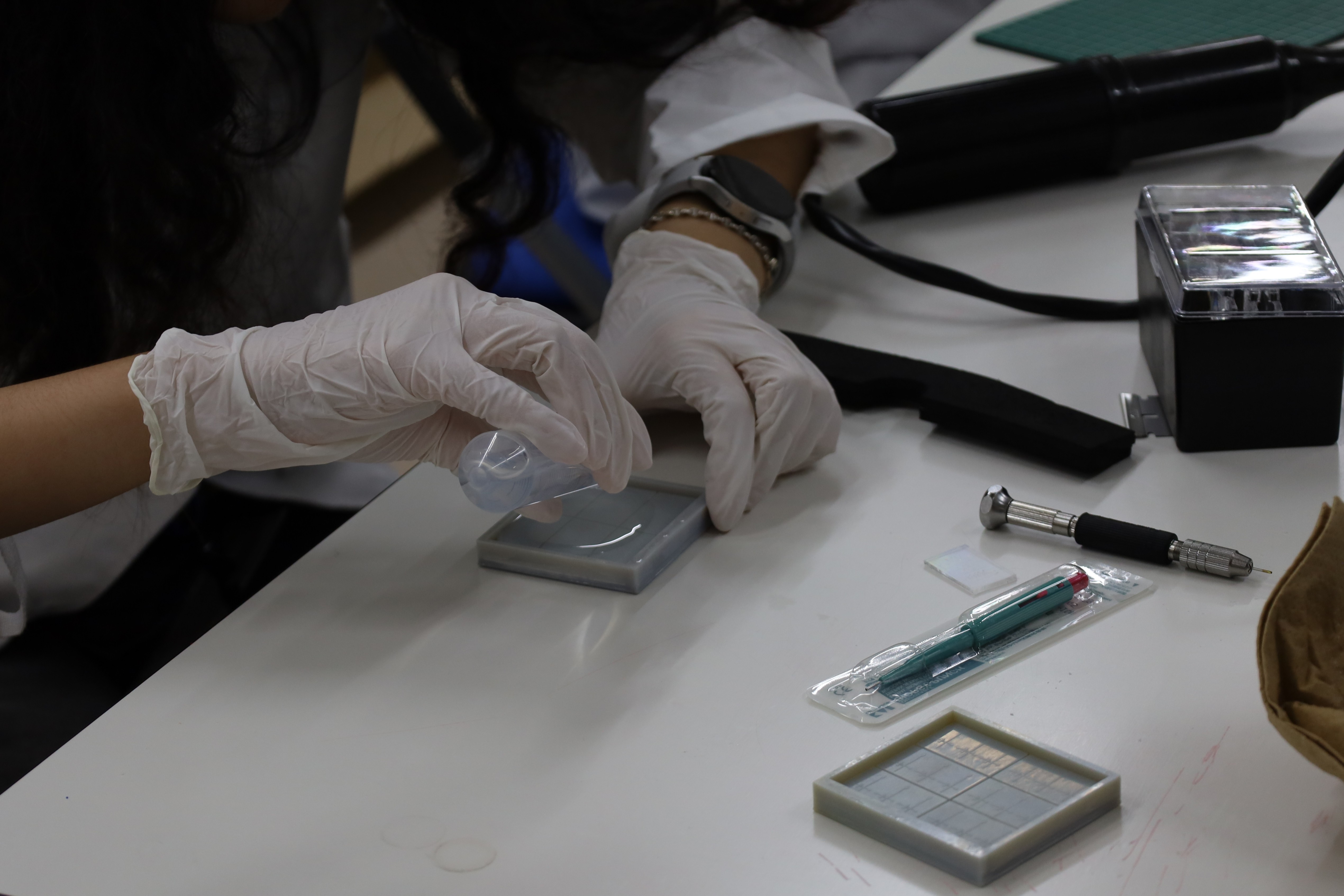
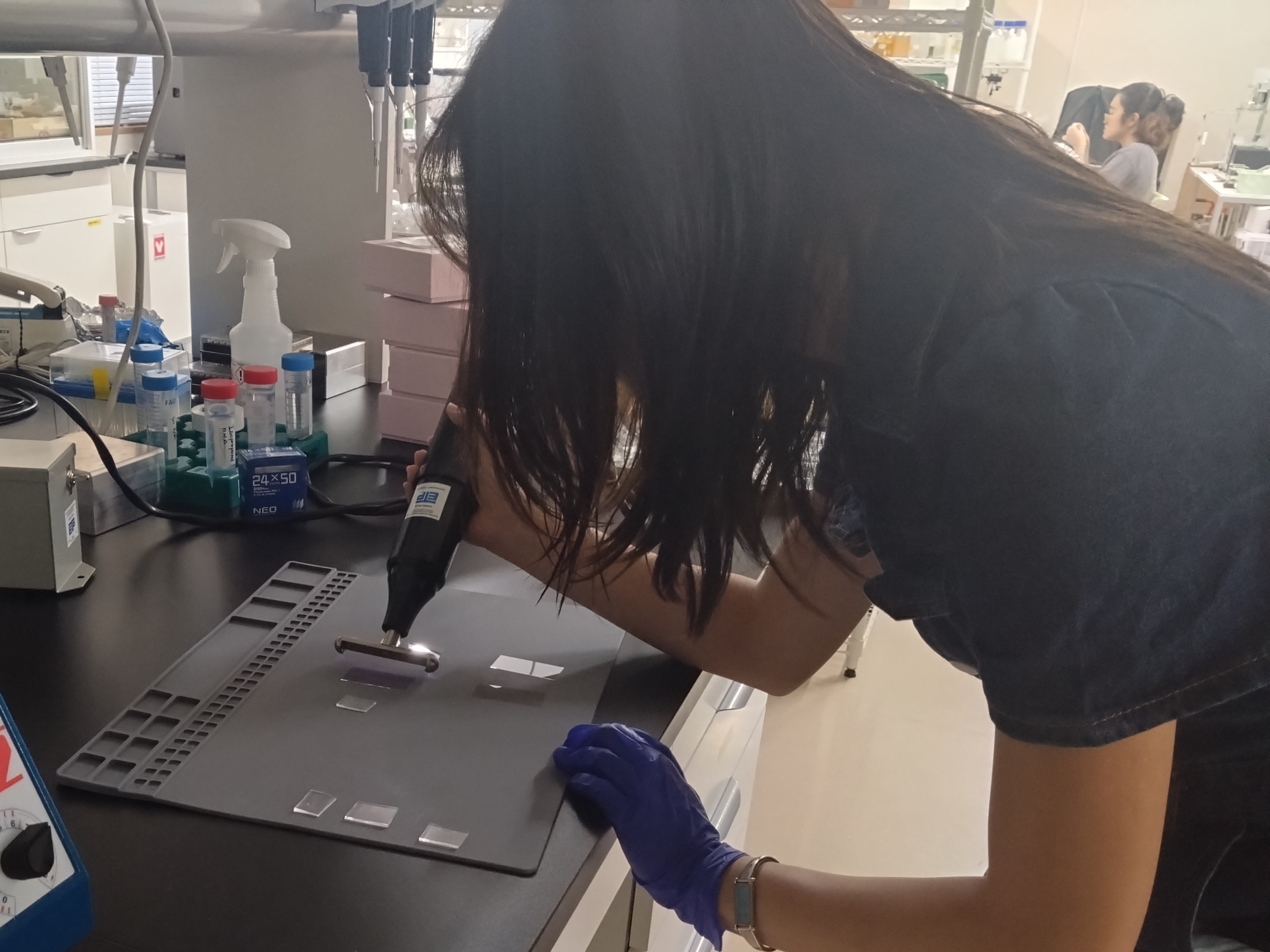
Left: Pouring PDMS (silicone) on microdevice mold. Right: Bonding microdevice onto microscope slide glass.
Brief Overview of the Research Internship Experience
The Soil and Plant Multi-Dynamics Unit mainly focuses their research on elucidating the interactions between soil and plants, with the goal of reducing the use of synthetic fertilizer and promoting the use of organic fertilizer in Fukushima farmland. Before researchers can start making and using organic fertilizer, first they must analyze how soil, plant roots, and soil bacteria interact with each other. However, it is difficult to observe all those interactions at the same time. Therefore, Senior Researcher Marcel uses a tool called ‘microdevice’.
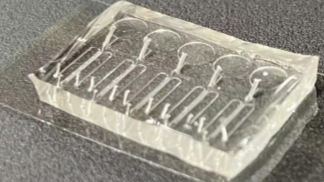
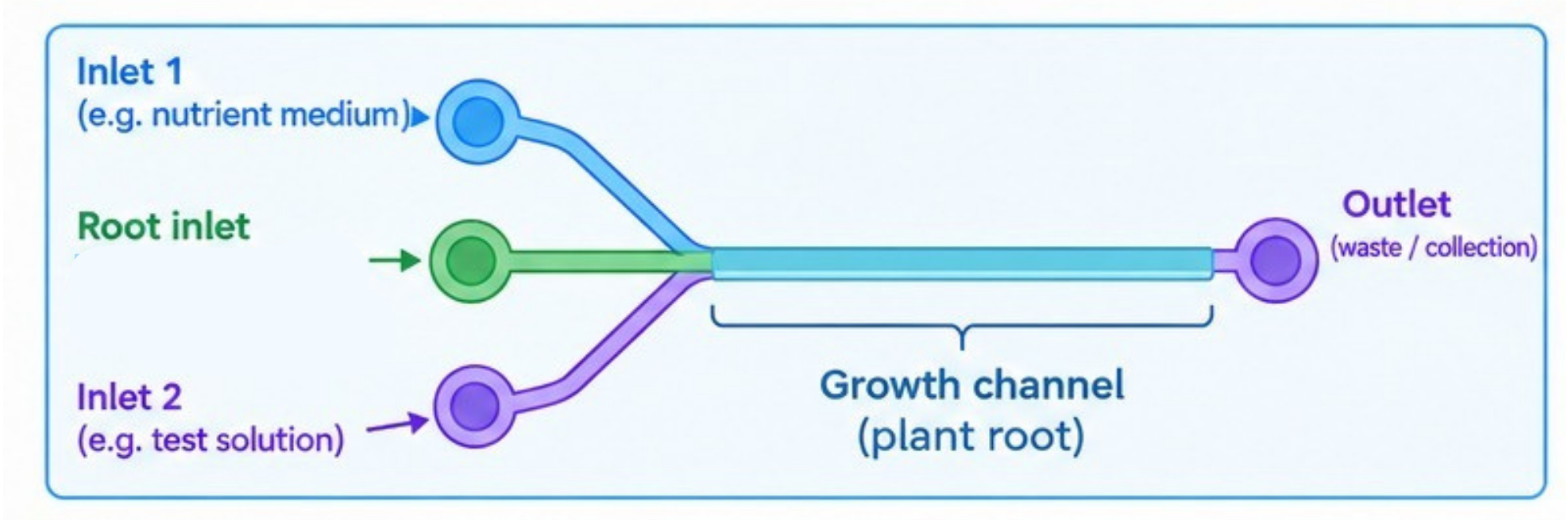
Left: A microdevice on a slide glass. Right: A microdevice allows scientists to grow and observe a tiny plant directly on a microscope slide. Sources: Both original figures were provided by Senior Researcher Marcel.
The microdevice used here is a small silicone plate (just about the size of a microscope slide) that has a small hole where plant root can grow in. It also contains tiny channels where fluids, carrying nutrition, treatments, or bacteria can be flown in. (It’s like growing a tiny plant directly on a microscope slide.) Moreover, it is transparent and can be used together with advanced microscopy techniques. Therefore, a microdevice is an extremely useful tool for scientists who want to analyze interactions between living organisms and their environment at a microscopic scale.
In this year’s Summer Internship program, participants designed and fabricated their own microdevices using 3D printing technology. Next, plant roots (or bacteria) were seeded to the microdevices and allowed to grow for 2 days. Finally, the microdevices were observed under a microscope.
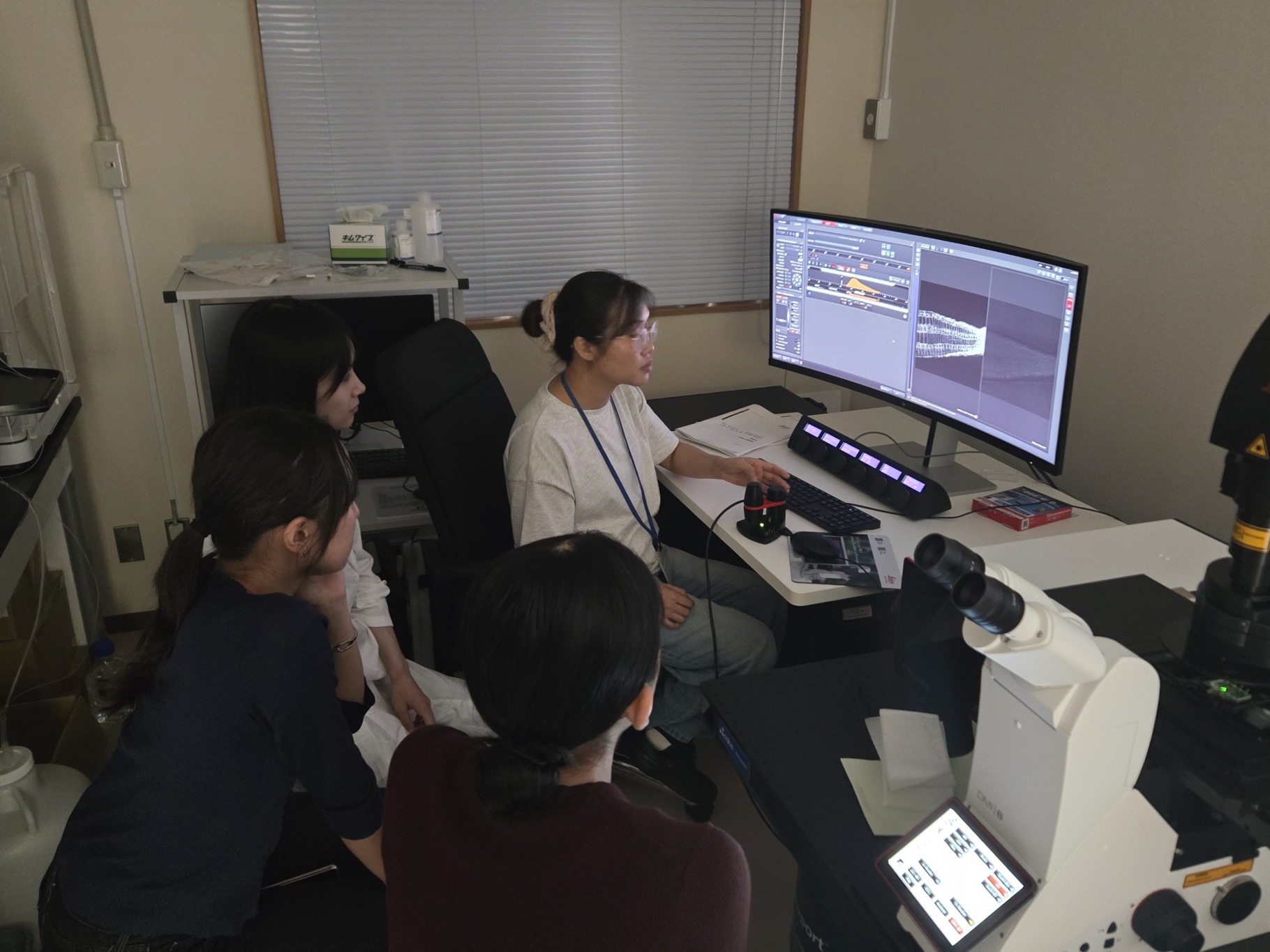
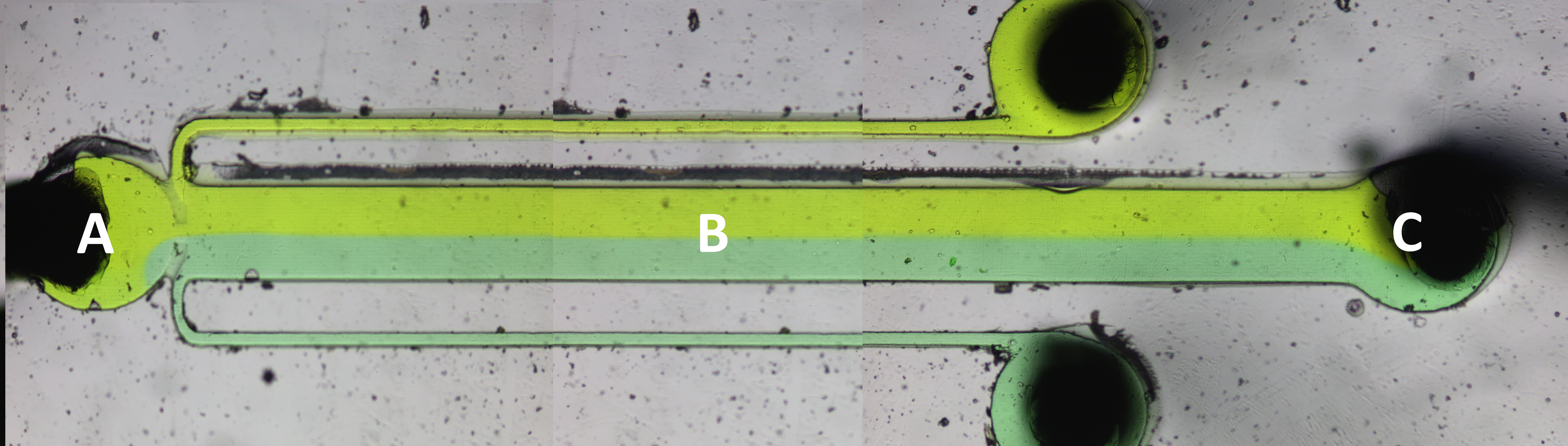
Observation of microdevice under microscope. Top: Summer Internship students mentored by Unit Researcher. Bottom: Microdevice appearance under microscope. A = Inlet; B = Growth chamber; C = Outlet
From the Students
After completion of research activities, we had the opportunity to speak one-on-one with three students. The youngest of the group, OSAKAKI Asahi, is a 4th year student of Chemical Engineering at the National Institute of Technology, Fukushima College (Fukushima KOSEN). Diona Angelica Manurung is an international student from Indonesia who just finished her undergraduate in Bioinformatics at Keio University. Kuge Ryoya is a 1st-year master’s student of the Joint Graduate Program in Transdisciplinary Sciences between Japan Advanced Institute of Science and Technology (JAIST) and Kanazawa University. We spoke with them about their motivation in joining F-REI Summer Internship, what they learned at the program, and their future goals. We also discussed their experience in Fukushima and hopes for reconstruction.
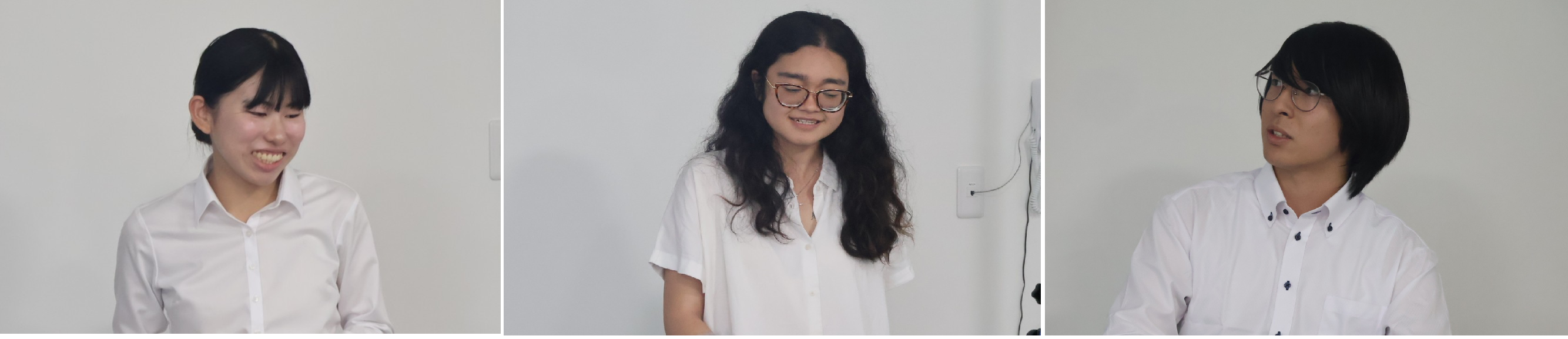
Left: Fukushima KOSEN 4th-Year Student, Osakaki
Center: Keio University 4th-Year Undergraduate Student, Diona
Right: JAIST–Kanazawa University Joint Graduate Program in Transdisciplinary Sciences 1st-Year Master’s Student, Kuge
Q. Could you tell us about your background and why you decided to participate in F-REI Summer School?
Osakaki: I am a 4th year student at Fukushima KOSEN, and I was required to participate in a practical training program over the summer. While looking through the available options, which included various companies and universities, I thought, “I want to gain experience at a research institution outside of my own college!” Plus, I have an interest in microorganisms, so that’s what drew me to this program.
Diona: My undergraduate major is bioinformatics, so I have never conducted any wet-lab experiments. In the dry lab, we do various analysis using data generated by wet-lab researchers. But I have no idea how they conduct research to produce that data. So, I came here to learn about that.
Kuge: In high school, I studied agriculture through a research program hosted by a university; in college, I majored in information science, and later, in graduate school, I shifted my focus to neuroscience. I decided to participate because I saw a connection between my previous research and this unit’s summer school program. In particular, I felt that microdevice could be applied to my own work in neuroscience. Moreover, I was interested in both F-REI and Fukushima. The circumstances surrounding the establishment of F-REI were especially intriguing to me. So, another reason I participated was to learn more about research career and work environment at F-REI.
Q. What did you learn from working with researchers in this unit?
Osakaki: While creating these microdevices, I learned how to use equipment that I had not used before. At KOSEN, I do not yet belong to a research laboratory, so this was my first experience working with actual researchers, together with people of various ages and backgrounds. It was truly an enlightening and valuable experience. Moreover, I realized the importance of English. In this program, I frequently encountered situations where English was used for communication. My own conversational English skill is not very strong; I realized that by improving my English skill, I would be able to conduct deeper research and share ideas with a wider range of people.
Diona: I learned first-hand how biology researchers work in the lab. Not just from doing the research program of Dr. Marcel, but by observing what other researchers were doing as well. Through discussions with researchers, I was able to understand how they make hypotheses and how they ensure the robustness and reproducibility of the experiments. I’ve noticed, also, that in wet-lab experiments, some things are just beyond your control. There are external factors that influence your outcome, which is not the same in dry-lab computer experiments.
Kuge: From Marcel, I gained a lot of practical knowledge and technical skills on how to make and use a microdevice. I want to use a microdevice in my own research, such as to observe the activity of brain cells. So I’ve had a lot of discussions with Marcel about what to use and how to do it. There are many things I want to try in my own work going forward.
Q. Did the experience change how you think about research or your future?
Osakaki: After graduating from Kosen, I can transfer into the third year of university, so I’d like to pursue a research career. I’m aiming for a Faculty of Agriculture, but transfer options are somewhat limited. Also, I’m actually more interested in fisheries, or perhaps microorganisms in the ocean, than in agriculture itself. So, I’m still weighing up my choices.
Diona: I definitely still want to do research. I plan to stay in the field of genomics in general, but maybe I’m looking specifically into environmental metagenomics or antimicrobial resistance. But, as I said before, I came here to see how research looks like for a wet-lab biologist. Even though I am a bioinformatics major, my background is in computer science, so compared with the other students, I feel that my biology knowledge might be a little limited. So, having discussions with Dr. Marcel and everyone has given me valuable insights into the thought process and work of wet-lab biologists.
Kuge: After joining programs in many research institutes, including F-REI, I hope to continue conducting research in an international environment, preferably at a research institute established by the Japanese government.
Q. How has your impression of Fukushima changed after coming here for F-REI Summer School?
Osakaki: Having lived in Iwaki City for a long time, I experienced the disaster firsthand. However, before coming here, I hadn't really thought about memories from that time. Seeing the museum and disaster site in person brought back memories of my own evacuation. I was also reminded that there was a friend at my elementary school who had evacuated from Okuma Town. I realized how much my own memories had faded over time. Also, since I was only three years old when the disaster struck, I recognized the importance of talking, even if not frequently, with my parents and others who lived through it.
The exhibit that left the deepest impression on me was a mobile phone used by a firefighter to contact his family while he was engaged in rescue operations. It really stuck with me, realizing that the people working on the front lines, including those dealing with the nuclear plant crisis, had families of their own and were anxious, yet they still took action for the sake of others. I felt that without their efforts, the damage would have been far worse; therefore, I felt strongly that we must never forget to be grateful to those who fought for us.
Diona: All I knew was the fact that Fukushima had a nuclear accident. After coming here, I was surprised to learn that reconstruction efforts were still ongoing. At Ukedo Elementary School, seeing firsthand the extent of the damage caused by the tsunami was an eye-opening experience for me. I’m not sure how well known it is in Japan, but Indonesia also experienced a major tsunami in Aceh Province in 2024. I have not seen the remains of the Aceh tsunami either; however, seeing the remains of Ukedo Elementary School got me thinking, “This is probably what had happened in Aceh too.” And it also made me realize the importance of disaster preparedness.
Kuge: My grandmother was born in Fukushima, and although I visited the prefecture once about 8 or 7 years ago, that trip was quite brief. So, this recent visit left a much deeper impression on me. When the Great East Japan Earthquake occurred, I was an elementary school student, and I didn’t have an understanding about the damage caused by earthquake or nuclear accident or the danger of radiation. Now, after visiting the site, I was struck by how reconstruction had progressed further than I had imagined. I got the impression that recovery has reached a point where ordinary people can now enter areas that would have been off-limits immediately after the disaster. I also saw private homes returning to Namie Town, and signs that the area is increasingly becoming habitable again; seeing that made me feel happy. And, well, science claims it can save us from the devastation of such disasters. It’s not just about rebuilding; I was deeply impressed by the philosophy behind the F-REI becoming a creative hub for research, rather than just focusing on standard reconstruction efforts. By showing a vision that looks beyond mere recovery, this system—or rather, this approach to research—struck me as something truly excellent. Frankly, I felt it offered a genuine sense of hope.
Looking Back — Comments from Marcel Pascal Beier (Senior Researcher)
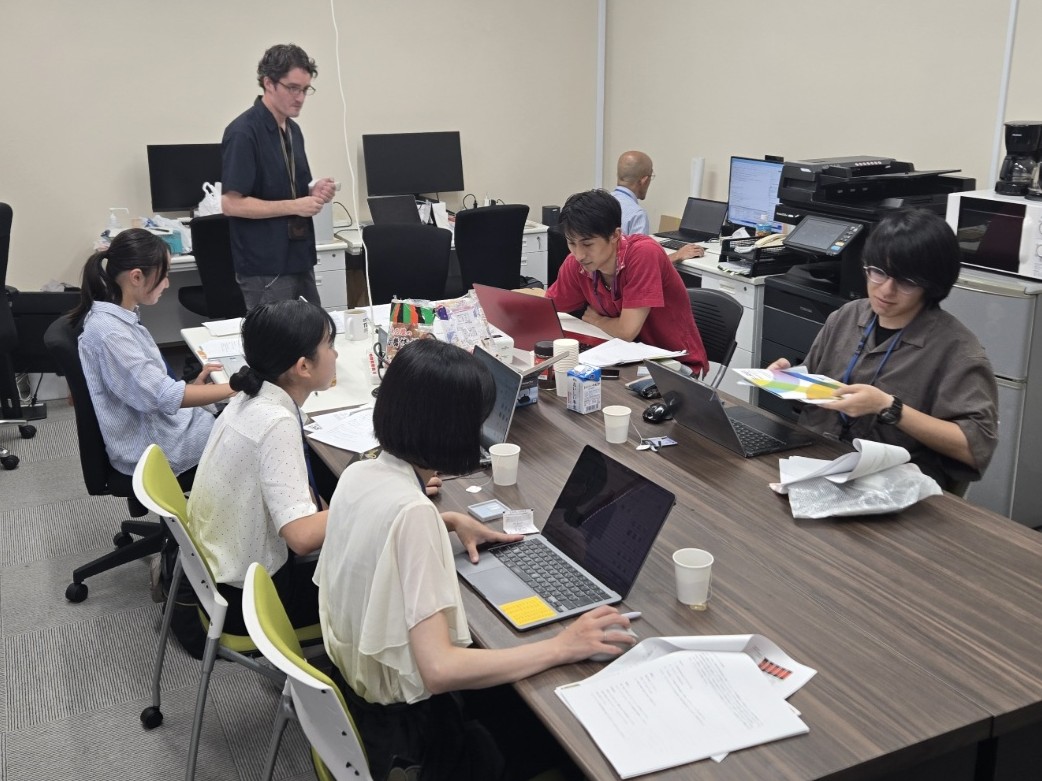
It was very impressive to see how actively the students engaged with the research despite their diverse backgrounds and different levels of experience, from first-year undergraduate students to second-year master’s students. Over five days, they experienced the entire process of microdevice research: designing their own devices for roots or bacteria, 3D-printing their designs, fabricating PDMS devices, growing biological samples inside them, testing fluid flow, and finally observing roots using confocal microscopy.
What I particularly enjoyed was seeing the students move from simply following instructions to asking their own questions about the experiments and considering how the devices could be improved. I hope they learned that research is a process of trying, observing, discussing, and sometimes learning from unexpected results.
More than just learning specific techniques, I hope this hands-on experience encourages them to be curious about different fields and gives them the confidence to explore new approaches to scientific research.
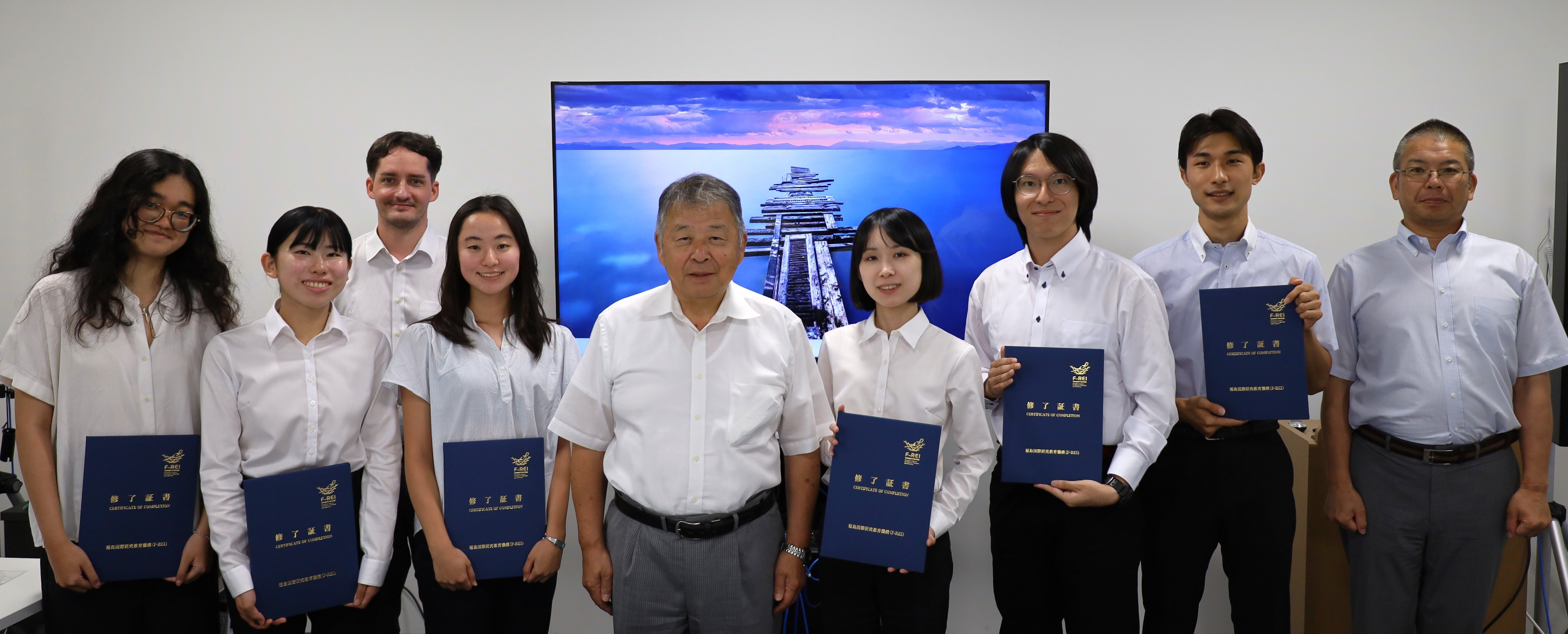
F-REI Soil and Plant Multi-Dynamics Unit Summer Internship 2026 participants pictured with Senior Researcher Marcel (back left), F-REI President Yamazaki (center), and Unit Leader Nihei (far right) after students’ final report presentation and certificate ceremony.