From June 30 to July 17, F-REI’s Regional Environmental Co-Creation Research Unit hosted a visiting trainee from the Italian National Research Council (Italian: Consiglio Nazionale delle Ricerche, CNR), which is the largest research council in Italy. F-REI is honored to welcome Dr. Anna Di Palma as the first visiting trainee from overseas in F-REI history. An environmental scientist with a background in agrobiology and agrochemistry, Dr. Di Palma is dedicated to studies on environmental contamination and soil remediation.
In this three-week research training program, Dr. Di Palma contributed to developing a mass spectrometric** method for distinguishing different isotopes of radioactive cesium in plant and soil samples. This project aims to establish a protocol for accurately identifying the source of radiocesium that contaminates a given area.
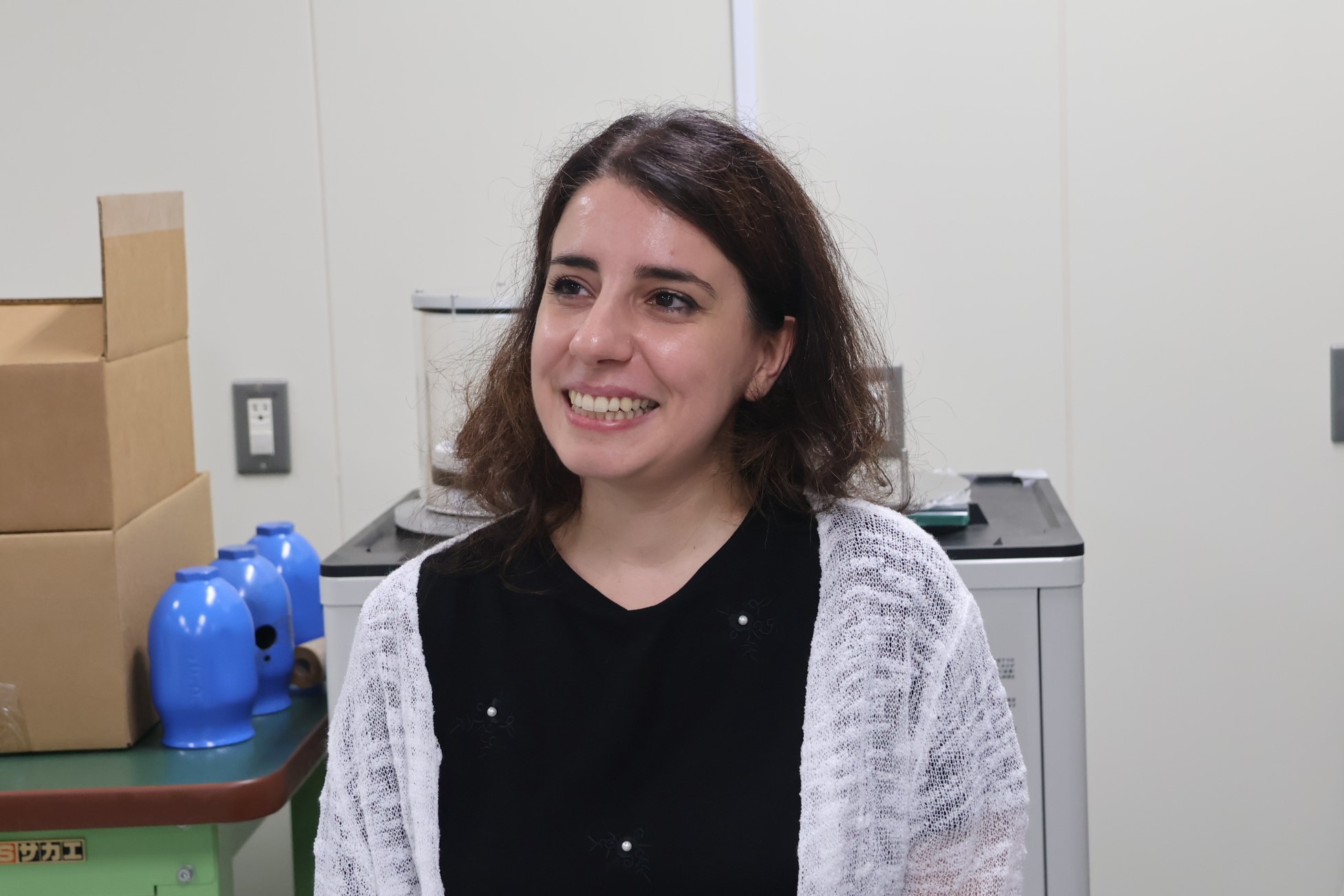
On July 15, we visited F-REI’s Regional Environmental Co-Creation Research Unit facility in Miharu Town to converse with Dr. Di Palma and Deputy Unit Leader AONO Tatsuo.
**Mass spectrometry is an analytical technique used to detect, identify, and measure the amount of molecules based on their mass-to-charge (m/z) ratio.

(Dr. Di Palma and Deputy Leader Aono during the interview)
Back in Italy, my heart longed for Fukushima
Dr. Di Palma first came to Fukushima in 2018-2020 to conduct research on the potential of mosses for monitoring airborne radiocesium levels. The study was published in Chemosphere in 2022.
After that, Fukushima remained in her heart. As though Fukushima was her second home, Dr. Di Palma constantly searched for ways to return.
The opportunity finally came in 2024, when Dr. Di Palma discovered F-REI through a chance meeting with Dr. Norbert Kavasi, who is a member of F-REI’s Regional Environmental Co-Creation Research Unit.
Research environment that facilitates exchange of knowledge
At F-REI, Dr. Di Palma improved her skills in mass spectometry under the guidance of Dr. Kavasi.
When asked about the research environment at F-REI, Dr. Di Palma cheerfully said that it was “the best.” F-REI connects scientists with different expertise, which allows an exchange of knowledge and skills. “At F-REI,” she said, “you can be a teacher and a student at the same time.”
Deputy Leader Aono added that hosting a visiting trainee became a valuable learning experience for his research unit. He shared, “Thanks to the presence of Dr. Di Palma in the laboratory, we can have an open discussion not only about research, but also about each other’s perspectives across different countries.”
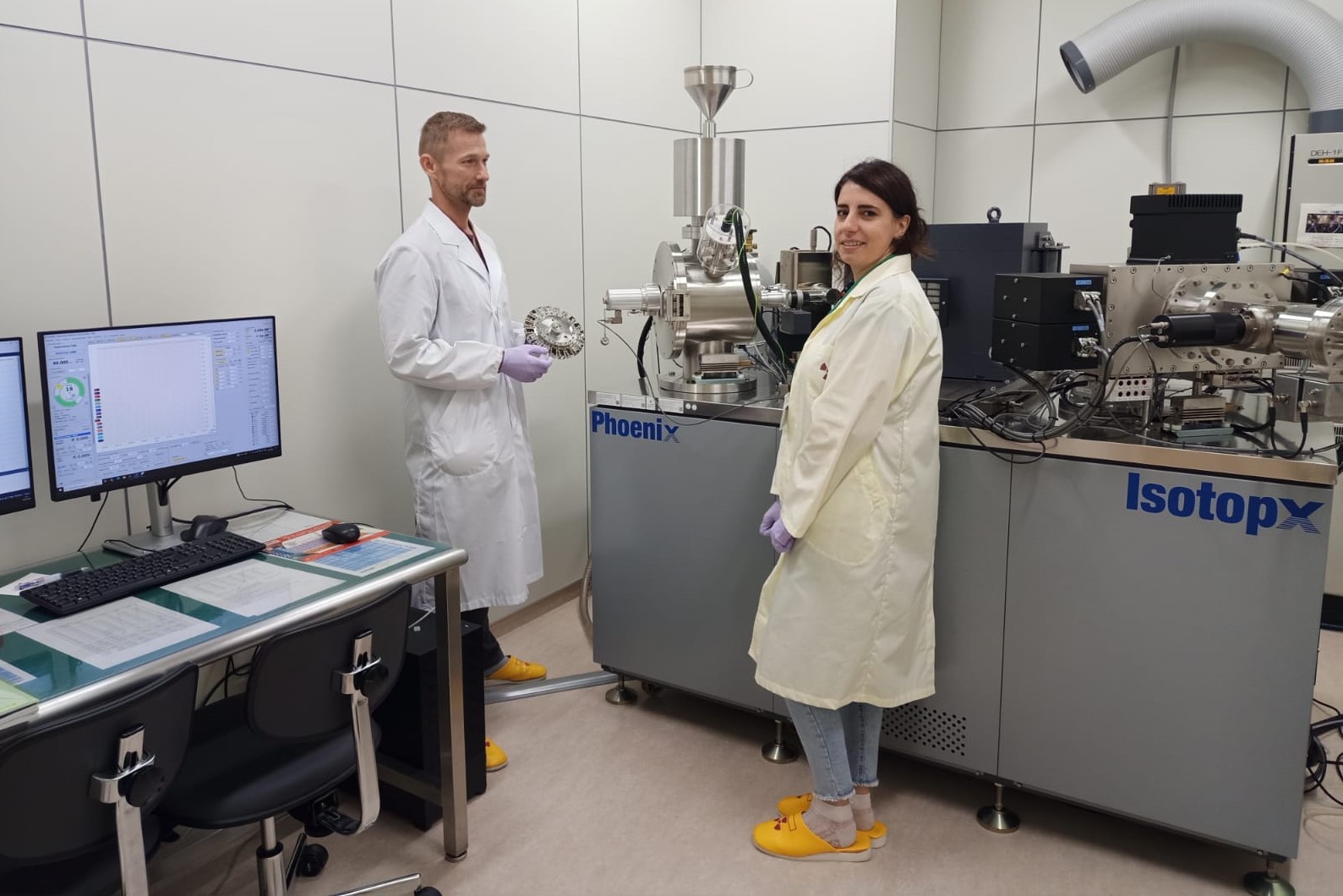
(Dr. Kavasi and Dr. Di Palma in F-REI’s laboratory)
F-REI’s mission: from Fukushima to the world
This short-term training program was initiated as a pilot study to explore future collaboration prospects. By hosting external trainees or researchers, F-REI seeks to build partnerships to promote joint research and knowledge transfer both within Japan and abroad. This is part of F-REI's commitment to not only realize the revitalization of Fukushima, but also spread the knowledge gained in Fukushima to the world.
Dr. Di Palma was drawn to F-REI because of that commitment. She said, “I truly believe in F-REI’s mission and hope that it will be accomplished.”
Listening to Dr. Di Palma’s sincere belief in F-REI’s mission, we found renewed confidence in our work.
F-REI offers opportunities for multidisciplinary research and collaboration
Though brief, the research experience at F-REI was meaningful for Dr. Di Palma. She felt that this experience gave her an opportunity to grow as a researcher and as a person. This was made possible by the hospitality of unit leaders, unit members, and other staff.
Deputy Leader Aono ended this interview with a message for prospective researchers: “We hope that more researchers will come to Fukushima, where F-REI provides cutting-edge facilities across five different research areas. We welcome all researchers to utilize these resources and lay the ground for research that extends to the next generation.”
We would like to thank Dr. Di Palma, Dr. Kavasi, and Deputy Leader Aono for their cooperation in this interview.
If you are a researcher looking to participate in joint research at F-REI, please send an inquiry through this website.
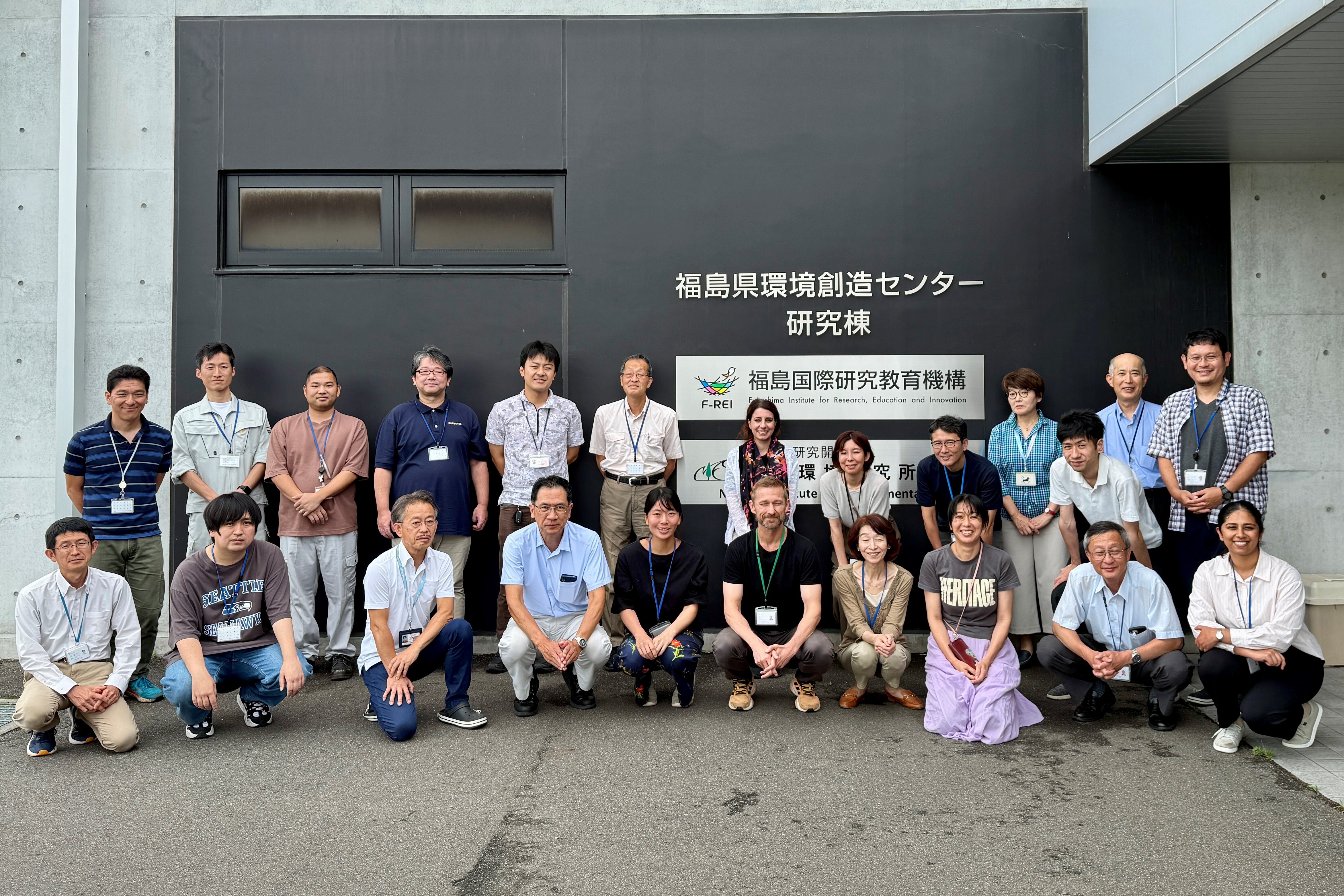
(F-REI’s Regional Environmental Co-Creation Research Unit)
[Reference]
A. Di Palma, et. al., Testing mosses exposed in bags as biointerceptors of airborne radiocaesium after the Fukushima Dai-ichi Nuclear Power Station accident, Chemosphere 308 (Part 1), 2022, 136179.
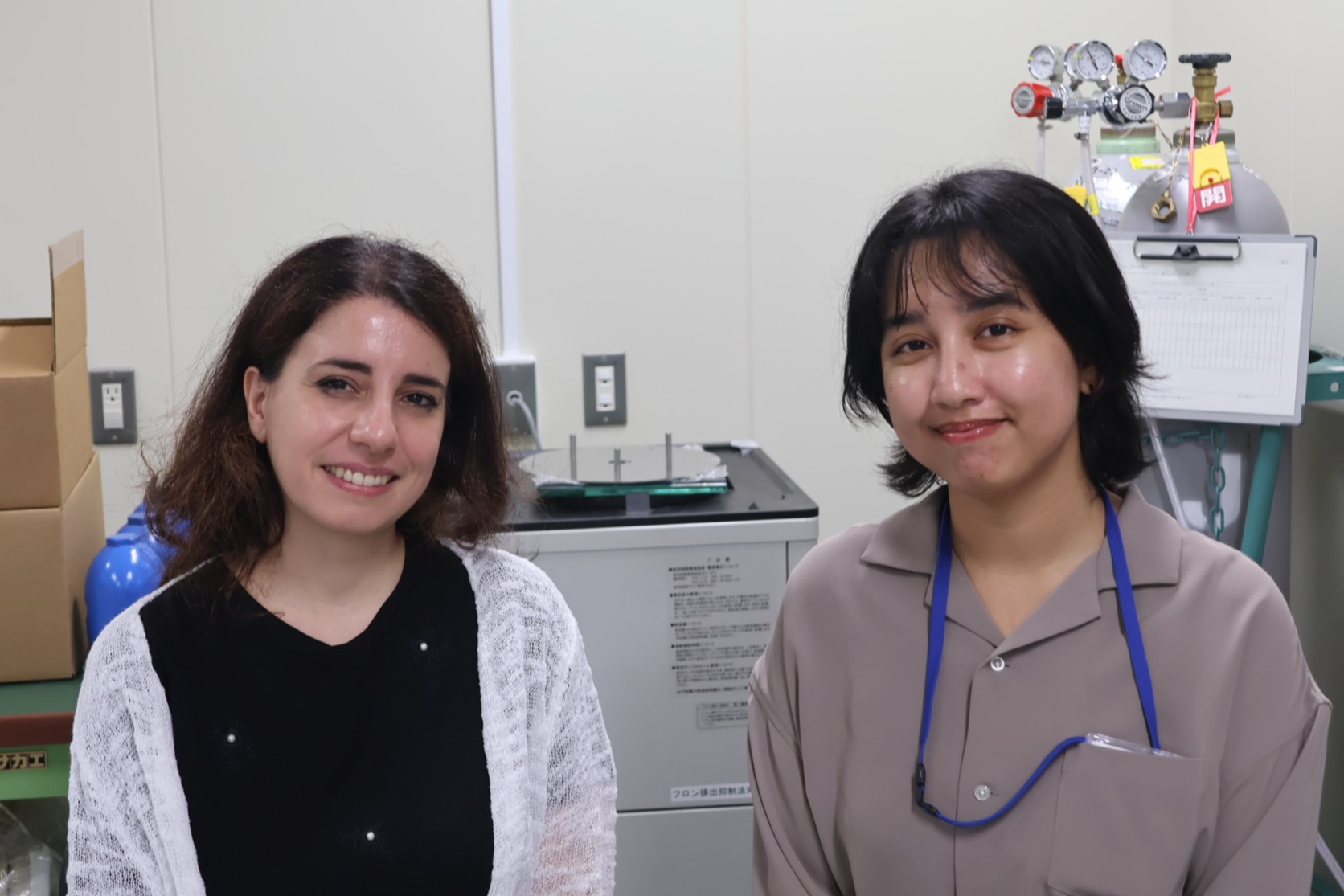
This article was written by Adela Faiza — F-REI's Science Communicator, Department of Research and Development Promotion
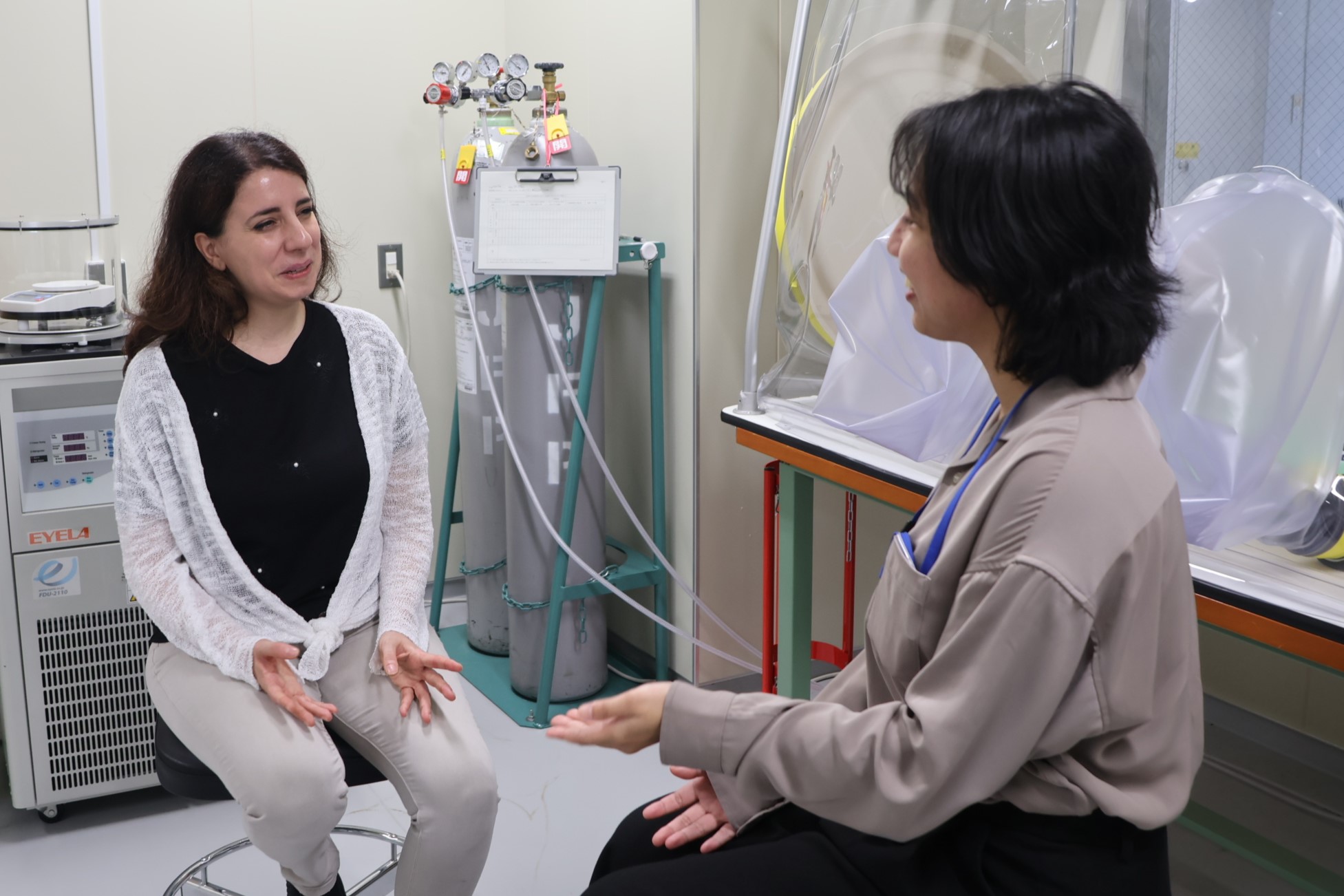
(Pictured: Dr. Di Palma with Science Communicator Adela after the interview)