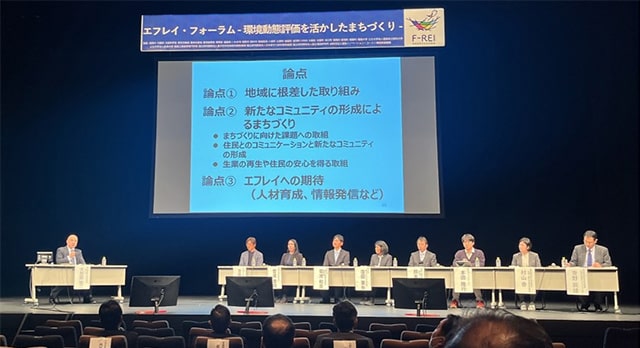

Outline of F-REI
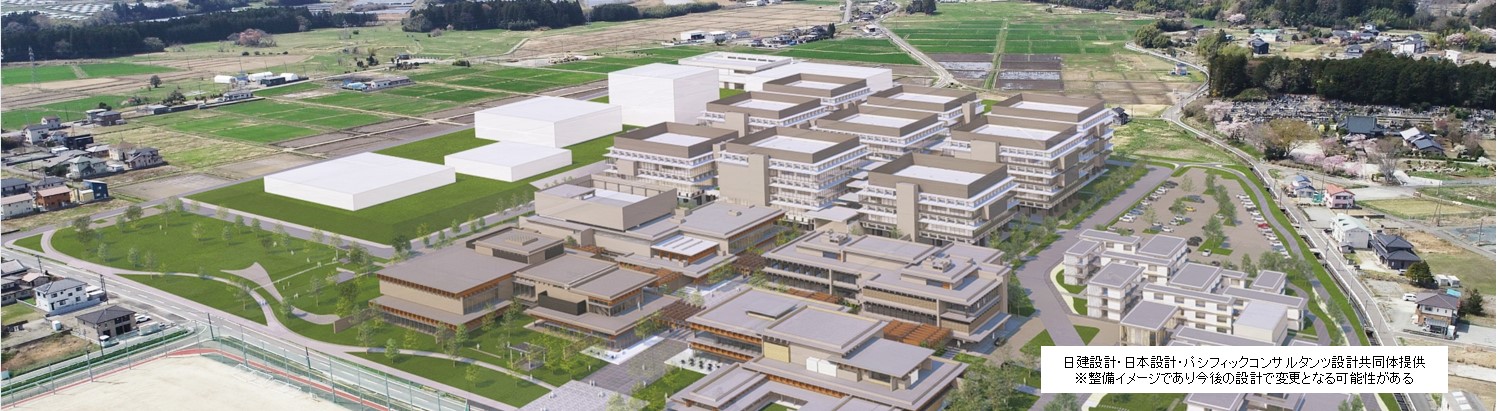
Institute Information
The Fukushima Institute for Research, Education and Innovation (commonly known as F-REI) is a special corporation established on April 1, 2023 under the Act on Special Measures for the Reconstruction and Revitalization of Fukushima.
In addition to providing dreams and hopes for realizing the reconstruction of Fukushima and other prefectures in the Tohoku region, F-REI aims to become a world-renowned “central institute for creative reconstruction” which drives forward with enhancing the scientific capabilities, technological capabilities and industrial competitiveness of Japan and contributes to economic growth and improvement to the daily lives of people living in Japan.
 Greetings from the President of F-REI
 F-REI's vision
Four Functions
F-REI combines the four functions below in a complex manner to create a ripple effect both within and outside Japan.
F-REI’s five research areas
F-REI aims to conduct world-leading R&D in five research Fields that can benefit from being conducted in Fukushima, a place unlike any other in that it has experienced an earthquake, tsunami, and nuclear accident. By creating one of the country’s leading world-class research centers here, and making it a core center for creative reconstruction, we aim to drive research beneficial for solving local and global challenges, and for encouraging industry creation.
Research results are combined and made to interact across the fields for further development.
1Robotics (Robots and Drones)
- Perspectives on research and development at F-REI (Fukushima)
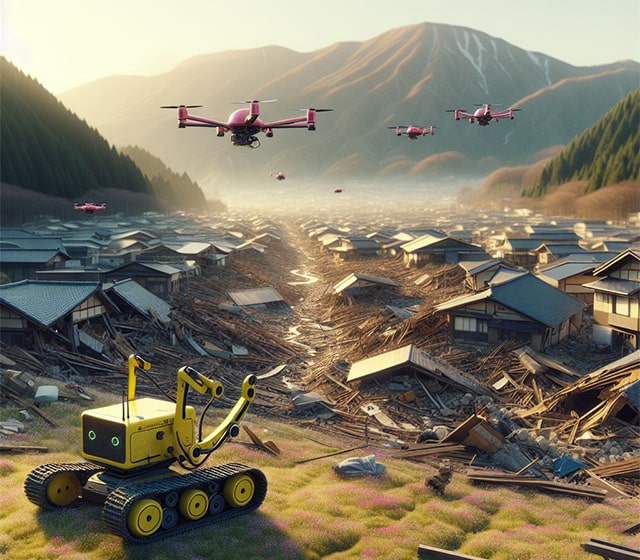
In Fukushima, which experienced a complex disaster, F-REI conducts research and development of robots and drones that are able to function in the harsh environments occurring during reactor decommissioning work and at natural disaster sites. - Policy for the field
F-REI will develop radiation, water and heat resistance high mobility to conduct research on intelligence to realize autonomous control and swarm control, and conduct research on functional expansion to enhance the sensory functions of living organisms, etc. F-REI will leverage the achievements of this R&D to promote the development of high mobility robots that can operate in harsh environments such as nuclear plant decommissioning, disasters, and outer space. Further engage in the development of high-function drones that can carry large payloads and achieve long flight, and the development of autonomous mobile robots, etc.
2Agriculture, forestry and fisheries
- Perspectives on research and development at F-REI (Fukushima)
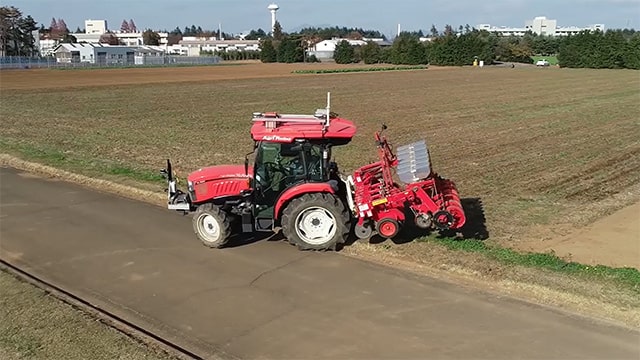
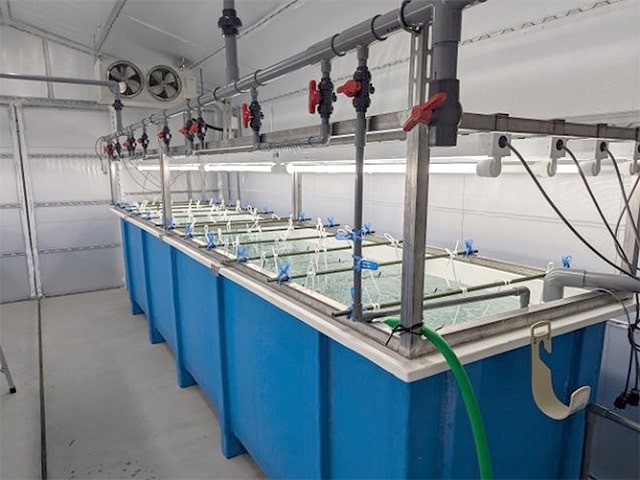
Taking into account the characteristics of the region, which has large areas of fallow land, mountains, and forests affected by the disaster, F-REI will take on the challenge of creating a next-generation agriculture, forestry and fisheries industry that goes beyond conventional thinking, and will also utilizer new technological seeds that go beyond conventional ideas. - Policy for the field
Aim to build a regional recycling-oriented economic model by establishing a high-profit/large-scale model with super labor-saving/super efficiency and the effective use of forest resources through full automation, robotization, and smartification of agriculture, forestry and fisheries work. In the meantime, basic research on variety improvement, organic farming and contaminated soil improvement through the use of radioisotope (RI) tracers will be promoted*.
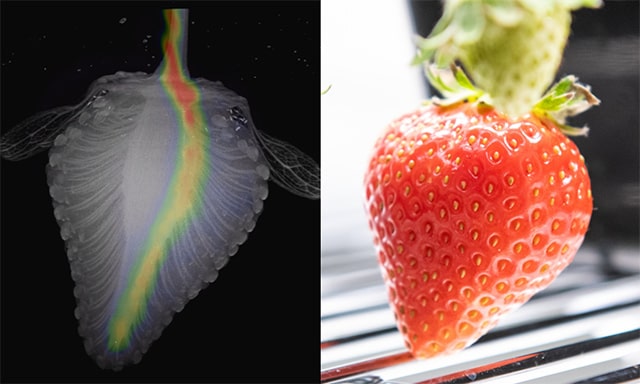
*In FY2023, in the fourth field (radiation science/drug discovery), planning to conduct visualization of element dynamics within plants using RI.
3Energy
- Perspectives on research and development at F-REI (Fukushima)
Achieve carbon neutrality in the region by utilizing existing hydrogen-related facilities, etc. Also contribute to the realization of pioneering smart communities - Policy for the field
In order to make Fukushima a pioneer of carbon neutrality in Japan, conduct research and development related to energy production, storage, transportation, and utilization, with a focus on renewable energy, while also addressing risk assessment, legal regulation, and establishment of technological standards with the aim of social implementation. Promote research on the use of hydrogen, ammonia, etc. as energy, as well as on CO2 capture and the utilization of CO2 as an energy source. Demonstrate that carbon neutrality and even negative emissions are possible based on the use of renewable energy, and contribute to the realization of a sustainable society through implementation of such system.
4Radiation science, medicine and drug development, & industrial applications for radiation
- Perspectives on research and development at F-REI (Fukushima)
Radiation science (nuclear physics, radiochemistry, environmental radiation science, nuclear medicine/drug discovery, electronic devices, etc.) will establish as a research foundation for creative reconstruction from the complex disaster in Fukushima, and will consider how to utilize it. - Policy for the field
Promote basic research on the use of radiation and technological development with a view to its industrial use in the fields of medical care, agriculture, and industry, aiming at contributing to well-being. In the medical field, the development of diagnostic techniques using radiation tracers and the development of cancer-targeted drugs using radiolabeled compounds, and in the agricultural and industrial fields, promote research on measurement science using radiation and technology development.
5Collection and dissemination of data and knowledge on nuclear disasters
- Perspectives on research and development at F-REI (Fukushima)
Make multiple efforts to contribute to the Creative Reconstruction of the Fukushima Hamadori region, which experienced a complex disaster.
Conduct natural science and social science research that contributes to a new regional revitalization. - Policy for the field
Conduct research and analysis of the natural environment and regional communities in the areas affected by nuclear disaster and accumulate and disseminate scientific knowledge to enhance regional safety. In addition, by promoting regional revitalization and community consensus building by making the best use of F-REI's research results, contribute to the creation of resilient towns where people can live in harmony.